When You Come From a Troubled Family
This companion page allows you to look inside the book. You can review the complete table of contents and read a sample chapter.
Complete Table of Contents and Sample Chapter
The book explores 20 common challenges that can grow from a troubled childhood, followed by practical chapters focused on understanding, change, and building a healthier future.
Click on any section title below to view its chapters.
-
About the Authors
The Many Faces of a Troubled Childhood
Where Am I Now?
The Quiet Questions (poem) -
1 Fear
2 Unpredictable Anger
3 Denial
4 Psychological Masks
5 Intimacy
6 Hypervigilance
7 Distrust
8 Depression
9 Guilt
10 Self-Esteem
11 Avoidance
12 Fatalism
13 Phobias
14 People Pleaser
15 Caretaker
16 Perfectionism
17 Abandonment
18 Black-or-White Thinking
19 Fear of Happiness
20 Conditional Love -
21 You Can’t Overcome What You Don’t Understand
22 Making Understanding Work
23 Your Childhood Doesn’t Get the Final Vote
24 The Cycle Can End Here
25 When the Childhood War Begins to End -
One Last Conversation
The Journey Beyond Your Troubled Family (poem)
Selected Sources and Further Reading
Sample Chapter
18
Black-or-White Thinking
If everything had to be right or wrong,
there was never room for me to simply be human.
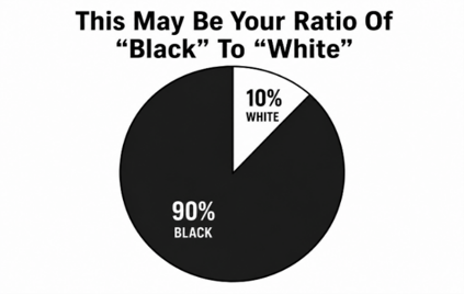
Black-or-white thinking has a way of turning ordinary moments into permanent conclusions. One mistake becomes failure. One disagreement becomes rejection. One disappointment becomes proof that nothing will ever change. Have you ever noticed how quickly your mind reaches a final conclusion? A small mistake suddenly feels like complete failure. One criticism outweighs a hundred compliments. A disagreement with someone you love leaves you wondering whether the entire relationship is falling apart. Instead of seeing life as a series of experiences that contain both strengths and weaknesses, successes and setbacks, your mind quietly pushes everything toward one extreme or the other.
Psychologists often refer to this pattern as black-or-white thinking or all-or-nothing thinking. It is the tendency to divide life into rigid categories with very little room in between. People become either trustworthy or untrustworthy. Situations become either successes or failures. You are either a good person or a bad one. There seems to be no middle ground where people can make mistakes, learn, grow, and still remain worthy of love and respect.
Most people occasionally think this way during periods of stress. When emotions run high, it is easy to exaggerate a setback or imagine the worst possible outcome. But for many individuals who grew up in troubled families, black-or-white thinking becomes much more than an occasional reaction. It becomes the primary lens through which they interpret themselves, other people, and the world around them.
The danger of this way of thinking is that it quietly changes the meaning of everyday experiences. Events no longer remain simple events. They become verdicts about your value, your future, or your relationships. One mistake is no longer just a mistake—it becomes evidence that you are a failure. One disappointment is no longer just a disappointment—it becomes proof that people cannot be trusted. The conclusions often become much larger than the events that created them.
The most damaging part isn't the event itself. It's how quickly your mind converts an experience into an identity. Instead of asking what happened, it begins asking what the event says about you. Once that shift occurs, disappointment becomes shame, criticism becomes rejection, and failure becomes a definition rather than an experience.
You may recognize this pattern in your own thinking:
One mistake means, "I always mess things up."
One criticism means, "I'm not good enough."
One disagreement means, "This relationship is doomed."
One disappointment means, "Nothing ever works out for me."
One weakness means, "I'm a failure."
Notice what these statements have in common. They all take one experience and expand it into a sweeping conclusion. Words such as always, never, everyone, and no one often become part of your inner vocabulary. Instead of describing what happened, they describe who you believe you are or what you believe life will always be.
Over time, this way of thinking becomes emotionally exhausting. Life begins to feel like a series of final exams where every decision determines your worth, every relationship hangs by a thread, and every mistake threatens your future. There is little room left for second chances, gradual improvement, or ordinary human imperfection.
The irony is that most of life doesn't work this way. Healthy relationships survive disagreements. Good people occasionally make poor choices. Success is usually built upon many failures. The world is far richer and more complicated than the rigid categories our minds sometimes create. Yet until we recognize this thinking pattern, we continue reacting to life as though every experience requires a final verdict.
How Black-or-White Thinking Develops
Black-or-white thinking rarely begins in adulthood. Like many of the patterns we've explored in this book, it often has its roots in childhood. It develops gradually as a young mind tries to make sense of a world that feels confusing, unpredictable, or emotionally unsafe.
Children naturally look for order. They want life to make sense. In a healthy family, they slowly discover that people are wonderfully complex. A loving parent may occasionally become impatient. Brothers and sisters can argue one minute and laugh together the next. Making a mistake doesn't suddenly make someone a bad person, and success doesn't mean a person is better than everyone else. As children mature, they learn that life is full of exceptions, contradictions, and gray areas.
A troubled family often interrupts that process. When home feels unpredictable, children have little time to think about life's complexities. Their attention shifts from understanding people to protecting themselves. Instead of wondering why a parent behaved a certain way, they become focused on something much more immediate.
"Am I safe?"
"Is today going to be a good day or a bad day?"
"Should I speak, or should I stay quiet?"
"Will I be accepted, or will I be criticized?"
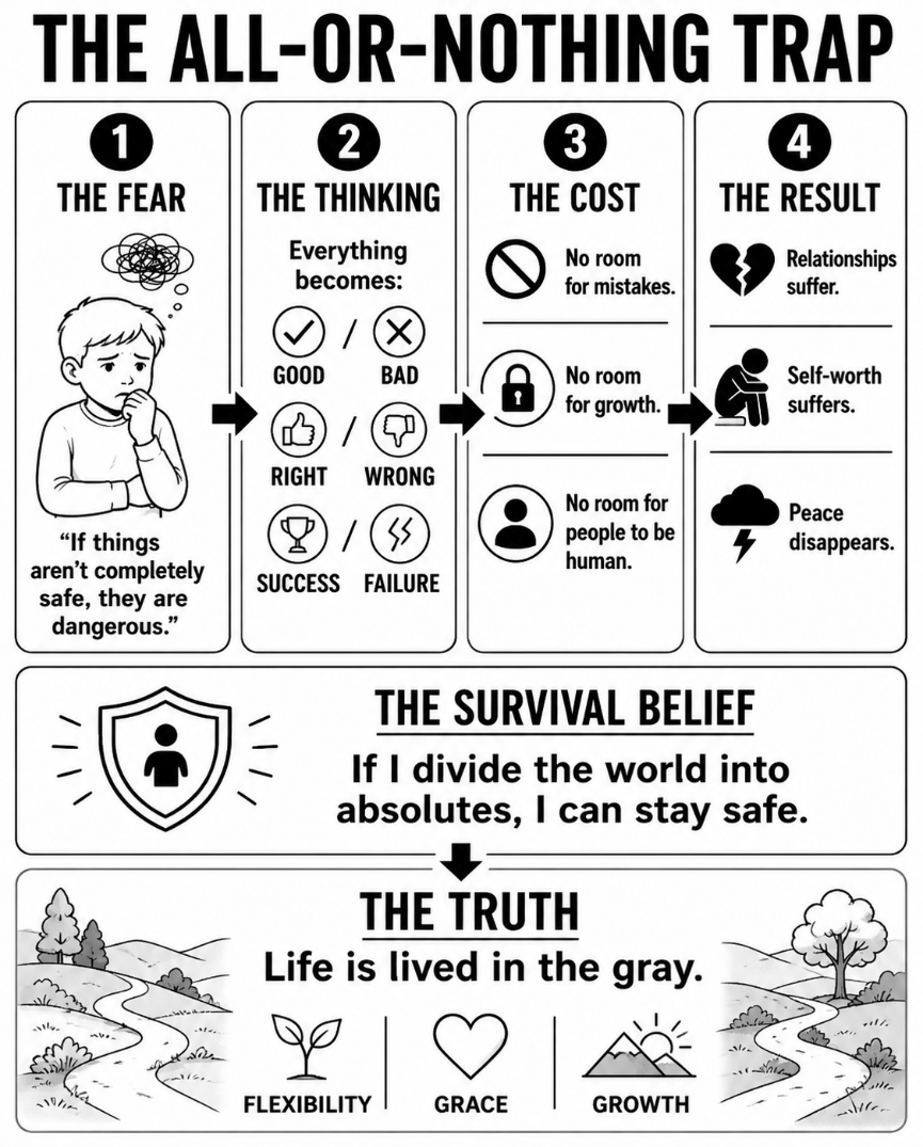
Those questions require quick answers. There is little room for uncertainty when a child is trying to avoid conflict, anger, rejection, or humiliation. The brain naturally begins simplifying the world into categories that can be recognized instantly. Safe or dangerous. Good or bad. Accepted or rejected. The more unpredictable life becomes, the more attractive those simple categories become.
Over time, those survival strategies become habits of thought. Long after childhood has ended, your brain may continue organizing new experiences the same way it always has. It isn't because you're stubborn or unwilling to change. Your brain simply keeps using the mental map that helped you survive years ago.
That old map, however, doesn't fit adult life very well. Healthy relationships are filled with mixed emotions. People sometimes disappoint us without intending harm. Good decisions don't always produce immediate success, and poor decisions don't always end in disaster. Reality is much richer—and much more complicated—than the simple categories our childhood minds created.
The problem is that your emotional reactions often arrive before your reasoning has a chance to catch up. By the time you begin thinking logically, your mind may have already decided, "This is a failure," "I'm being rejected," or "Everything is ruined." The conclusion feels true because it is familiar, not necessarily because it is accurate.
Understanding where black-or-white thinking comes from is not about blaming your childhood or your parents for every struggle you experience today. It is about recognizing that your mind learned this pattern for a reason. What once helped you navigate a difficult childhood may now be preventing you from seeing yourself, other people, and life with the balance and perspective that adulthood requires.
When Life Becomes a Series of Verdicts
By adulthood, black-or-white thinking often becomes so familiar that you no longer recognize it. It simply feels like common sense. Instead of viewing life as a continuous series of experiences, you unconsciously begin treating each event as though it were a final judgment about your worth, your relationships, or your future.
Imagine carrying around an invisible judge who evaluates everything you do. Every conversation receives a grade. Every decision earns a verdict. Every mistake becomes evidence in a lifelong trial. Instead of asking, "What can I learn from this?" the judge asks, "What does this prove about you?"
That difference is enormous.
Healthy people generally see mistakes as temporary events. They may be disappointed, embarrassed, or frustrated, but they eventually move on. Someone trapped in black-or-white thinking often experiences something very different. The mistake becomes personal. Instead of saying, "I handled that poorly," the thought quietly becomes, "I am a failure." The event changes from something you did into someone you believe you are.
The same pattern quietly influences your relationships. A disagreement with your spouse isn't simply a disagreement. It may feel like evidence that your marriage is falling apart. A friend forgets to return a phone call, and your mind begins wondering whether the friendship is ending. A supervisor offers one suggestion for improvement, and you begin questioning your entire career. The emotional reaction is often far greater than the situation itself because your brain has learned to interpret isolated events as permanent conclusions.
This way of thinking can affect nearly every part of your life.
Work: One mistake overshadows years of dependable performance.
Marriage: One argument begins to feel like the relationship is failing.
Parenting: One poor decision by your child convinces you that you've failed as a parent.
Friendships: One disappointment becomes a reason to withdraw or stop trusting.
Self-Worth: Your value rises and falls with your latest success or failure.
Perhaps the greatest damage occurs because black-or-white thinking leaves very little room for growth. Growth requires mistakes. It requires trying, adjusting, learning, and trying again. If every setback becomes proof that you should quit, growth becomes almost impossible. You begin avoiding risks, difficult conversations, and unfamiliar opportunities because failure feels far too costly.
It also affects the way you see other people. Someone you admire may seem almost perfect until they disappoint you. Then, almost overnight, your opinion swings to the opposite extreme. The person who was once wonderful now seems deeply flawed. Likewise, someone who makes a poor first impression may never be given the opportunity to earn your trust because your mind has already assigned a permanent label.
The tragedy is that real life doesn't operate that way. People are complicated. Relationships grow stronger by working through disagreements rather than avoiding them. Success is often built upon a foundation of mistakes, corrections, and persistence. The healthiest people are not those who never fail; they are those who refuse to let failure define them.
Black-or-white thinking turns life into a courtroom where every experience ends with a verdict. Emotional maturity transforms that courtroom into a classroom, where every experience becomes an opportunity to learn. That simple shift may be one of the most important changes you ever make.
Learning to See Life Differently
Changing black-or-white thinking doesn't begin by forcing yourself to "think positive." It begins by becoming aware of how often your mind jumps to conclusions without realizing it. For years, your brain has been making split-second judgments that once helped you survive. The goal isn't to criticize yourself for thinking this way. The goal is to notice it. Awareness is always the first step toward change.
The next step is learning to slow down. Black-or-white thinking demands immediate answers. It insists that every situation be labeled before all the facts are known. Healthy thinking is much more patient. It allows uncertainty to exist while additional information becomes available. Instead of rushing toward a verdict, it asks questions. Instead of assuming the worst, it remains curious. That small change can dramatically alter the way you experience both people and situations.
One of the most helpful questions you can ask yourself is:
"What else might be true?"
That question interrupts the automatic conclusions your brain has practiced for years. Perhaps your friend didn't ignore your text message. Perhaps they became distracted by an emergency. Perhaps your spouse isn't angry with you but simply had a difficult day at work. Perhaps your mistake says something about one moment—not about your entire character. Asking what else might be true doesn't deny reality; it expands your understanding of it.
Another important habit is learning to separate behavior from identity. Black-or-white thinking constantly confuses the two. A behavior is something you do. Your identity is who you are. Those are not the same thing.
When you say, "I failed," you are describing an event. When you say, "I'm a failure," you have turned that event into an identity. The first statement leaves room for learning and improvement. The second leaves only shame and discouragement. Healthy emotional growth depends upon recognizing the difference.
As you begin replacing rigid thinking with healthier habits, keep these principles in mind:
Describe what happened instead of labeling yourself. Replace "I'm terrible at this" with "That didn't go as well as I hoped."
Look for the whole picture. Don't allow one event to erase everything else that is true.
Be suspicious of absolute words. When you hear yourself saying always, never, everyone, or no one, pause and ask whether those words are really accurate.
Allow people to be imperfect. Others will disappoint you from time to time, just as you will disappoint them. Healthy relationships grow stronger through understanding, forgiveness, and honest communication—not perfection.
As this new way of thinking develops, you may notice something surprising. Life becomes less exhausting. You stop carrying the impossible burden of having to be perfect. Other people no longer have to live up to unrealistic expectations. Mistakes become opportunities to learn instead of evidence that everything is falling apart. Relationships become more resilient because they are no longer expected to survive only in perfect circumstances.
Perhaps the greatest change is that you begin extending grace to yourself. You recognize that your worth has never depended upon flawless performance. Like every other human being, you are a mixture of strengths and weaknesses, successes and failures, confidence and doubt. Accepting that truth doesn't lower your standards. It simply allows you to become fully human.
The goal is not to eliminate convictions or ignore reality. The goal is to see life more accurately. As you learn to move beyond the extremes, you discover that the gray areas you once feared are often where wisdom, compassion, and emotional freedom quietly take root.
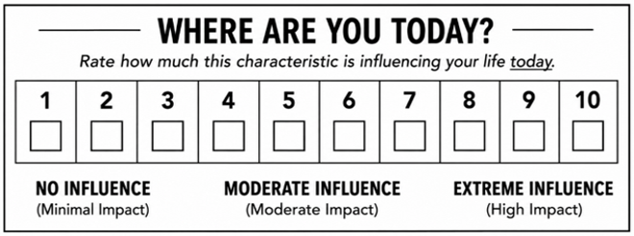
Take a few moments to honestly evaluate how much black-or-white thinking influences your daily life. Don't answer based on how you wish you responded. Instead, think about how you typically react when you make a mistake, receive criticism, experience disappointment, or face uncertainty. Your first reaction often reveals the thinking patterns that have become most deeply ingrained.
Understanding Your Score
Scores of 8–10 (Strong Influence)
Black-or-white thinking has become a major influence in how you interpret yourself, other people, and difficult situations. Experiences may seem either completely successful or total failures, and people may appear entirely trustworthy or entirely unsafe. A single mistake, disagreement, or disappointment can quickly change your view of yourself or someone else. This way of thinking may once have helped you make rapid decisions in an unpredictable environment, but it can now intensify conflict, self-criticism, and emotional reactions. A qualified counselor can help you slow down these judgments, tolerate uncertainty, and recognize the fuller range of possibilities between the extremes.
Scores of 4–7 (Moderate Influence)
Black-or-white thinking affects you most strongly when you feel hurt, criticized, threatened, or overwhelmed. In calmer moments, you can usually recognize complexity and consider more than one explanation. Under stress, however, you may quickly decide that something is all good or all bad, that you have succeeded or failed, or that someone is either for you or against you. Learning to pause and look for exceptions, additional information, and less extreme interpretations can help you respond with greater balance.
Scores of 1–3 (Limited Influence)
You generally recognize that people, relationships, and situations contain a mixture of strengths, limitations, successes, and disappointments. You may occasionally react in extremes when emotions are intense, but you can usually reconsider after you have had time to reflect. A mistake does not automatically erase everything you have done well, and a disagreement does not necessarily mean a relationship has failed. Your ability to tolerate complexity helps you make thoughtful decisions without demanding absolute certainty.
Key Takeaways
A Childhood Survival Strategy: Black-or-white thinking often develops in unpredictable homes where children simplify the world in order to feel safer.
More Than Negative Thinking: It is not simply pessimism. It is the tendency to turn isolated events into sweeping conclusions about yourself, others, or your future.
The Hidden Cost: This pattern quietly fuels anxiety, perfectionism, damaged relationships, low self-esteem, and the fear of making mistakes.
Perspective Creates Freedom: Learning to pause, consider other possibilities, and tolerate uncertainty allows you to see life more accurately.
Growth Happens in the Gray: Healthy emotional living isn't found at the extremes. It grows in the space where people are allowed to be imperfect, relationships are allowed to recover, and mistakes become opportunities to learn.
Reflection
When you were a child, seeing life in black and white probably helped you survive. It simplified a world that often felt confusing and unpredictable. Those simple categories gave your young mind a sense of order when very little else made sense.
Today, those same categories may be keeping you from experiencing the richness of real life. The people who love you are imperfect. You are imperfect. Every meaningful relationship will experience disappointment, misunderstanding, forgiveness, and growth. That isn't failure. That's simply what it means to be human.
Perhaps one of the greatest signs of emotional maturity is discovering that you no longer need life to fit into neat little boxes. You can accept uncertainty without becoming fearful. You can acknowledge mistakes without condemning yourself. You can disagree without rejecting. You can see both strengths and weaknesses in yourself and in others—and still choose love, respect, and hope.
"The highest form of intelligence is the ability to observe without immediately evaluating."
— Jiddu Krishnamurti